Patching a known flaw
A public warning says that a component used in many systems has a serious flaw. The next day Security emails several hundred colleagues: anyone running the component must patch it within two days. The person who looks after the customer portal isn’t among them, and nobody else thinks the portal is theirs to patch. Two months later attackers get in through the portal.
You lead the follow-up and sit in none of the three teams. In the review, Security points to its email, and IT Operations and the portal team each say the portal was the other’s to patch. You want the next warning to reach whoever patches the portal.
Three responsibilities between Security, IT Operations and the portal team
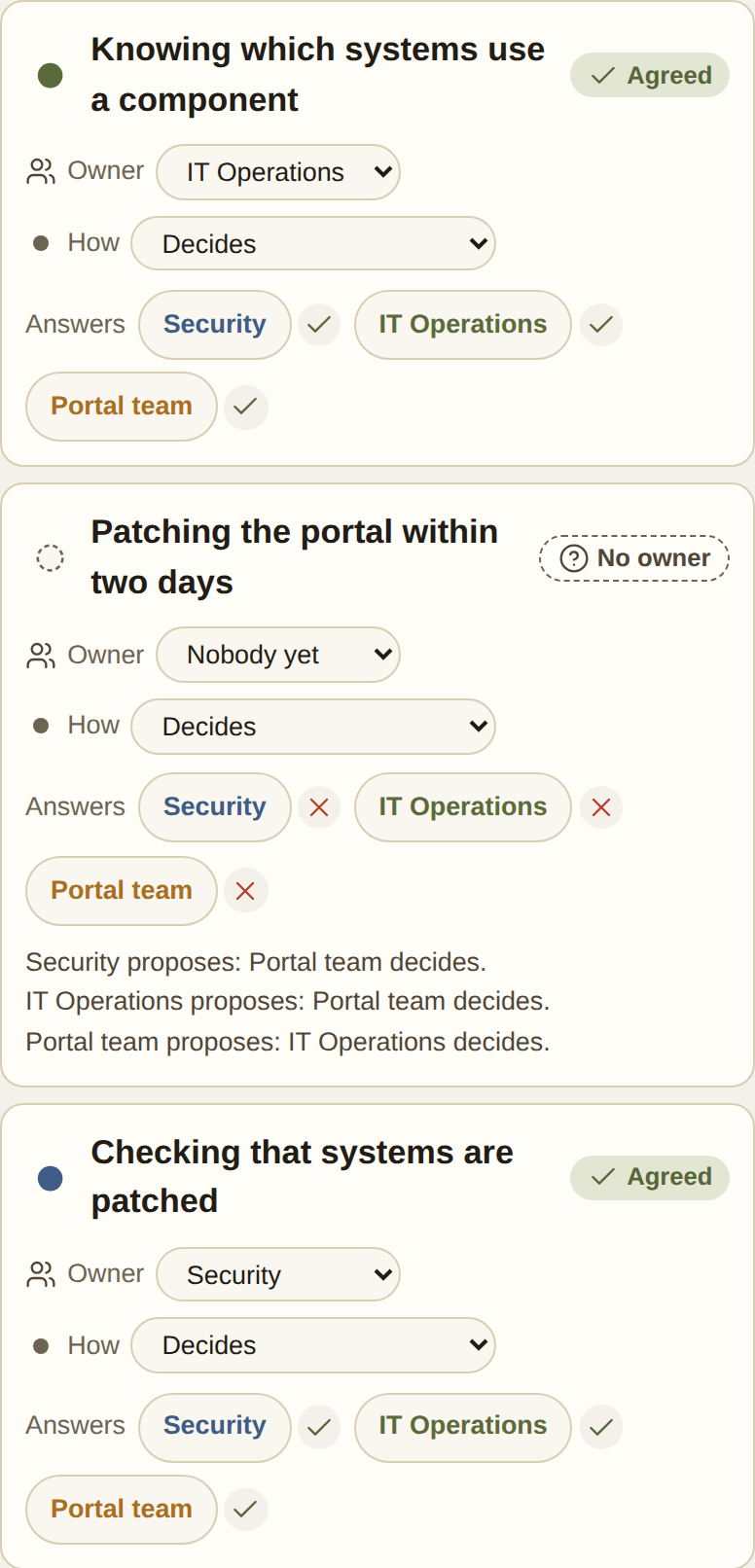
You create a map for the three teams and write down each piece of work: knowing which systems use a component, patching the portal within two days, and checking that systems are patched. You propose that IT Operations keeps track of the components and that Security checks. For patching the portal you can’t name an owner, so you leave it open, and it is marked No owner.
Each team’s answer
You invite people from all three teams into your company’s atlas, the place in Reimagine where its maps are kept. They agree on the first and the last responsibility. On patching the portal, Security and IT Operations name the portal team, and the portal team names IT Operations, so it stays marked No owner.
Who patches the portal
You put the map on a shared screen, with each team’s position but not who answered, and ask who should patch the portal. The portal team answers that it can, once it hears about the flaw. The teams agree that the portal team patches the portal, and that IT Operations tells it when a component the portal uses has a flaw. You change the responsibility for patching the portal and IT Operations’ responsibility for keeping track of the components to say so, all three teams answer again, and every responsibility is agreed.
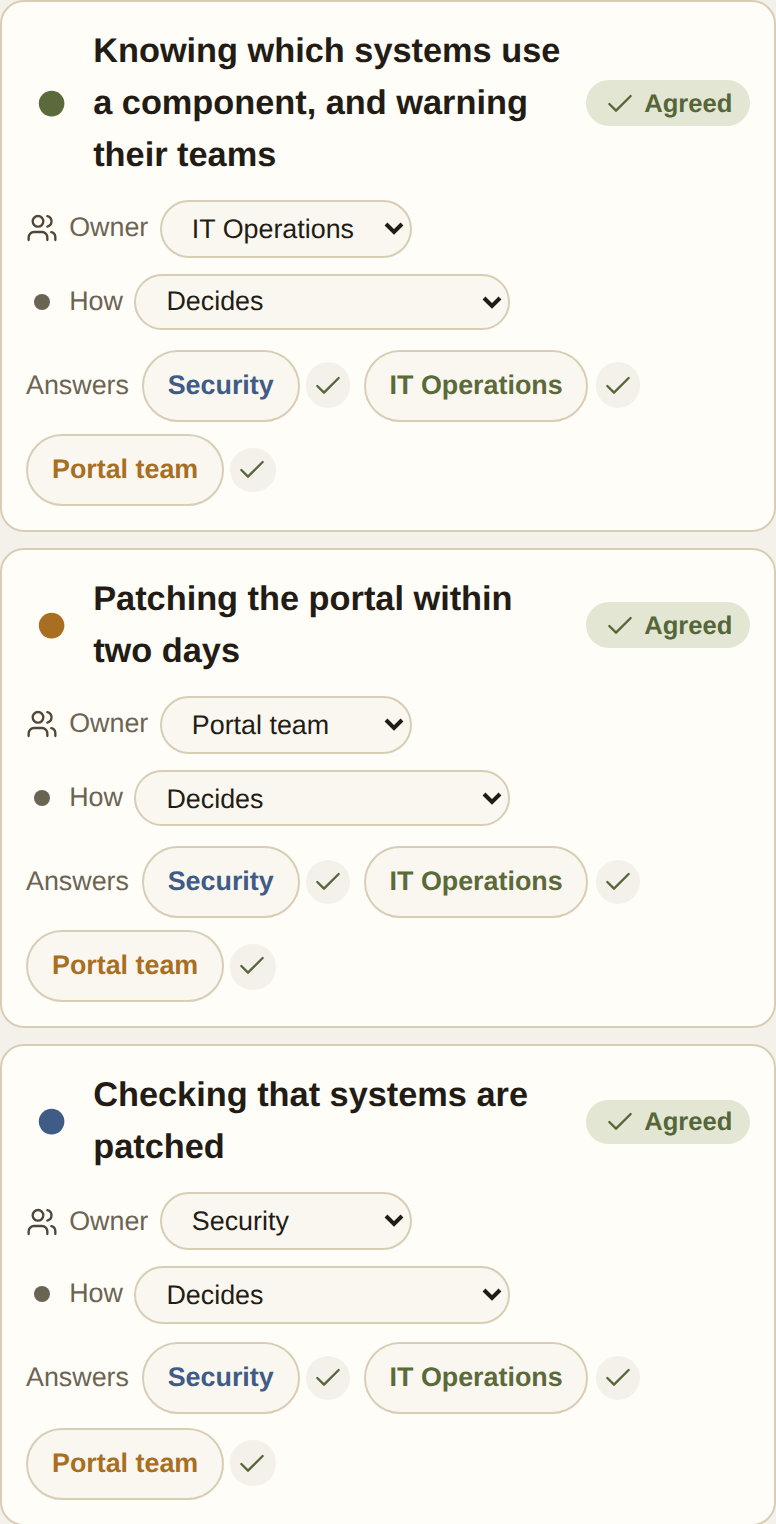
As the map says, IT Operations sends the next warning to the portal team, and two days later Security checks that the portal is patched.
The template for patching a known flaw has responsibilities like these already written, eight in all, for Security, IT Operations and the application teams.
You make a map like this one in Reimagine, in your browser, and each team answers there. While Reimagine is a preview, access is by invitation and free. When you ask, Reimagine writes to you once you can create your company’s atlas, and the atlas starts with a sample map you can try before you invite anyone.