A mandate map shows team gaps and overlaps. This example is invented.
Moving a job to a new platform
ShippinVest sends a confirmation by email and SMS for every booking. For twelve years a PHP server has done it, one booking at a time. The new platform team is building its replacement in Java, as separate services that each do one step. Booking confirmations are the first messages to move. The old job has to be switched off before the new one is switched on, or every customer gets two.
You took over as project manager last month, and ShippinVest has no test manager. The new platform team says the new job should do what the old server does. The legacy team, which looks after the PHP server, says the answer is in the code. You want to set a date for the switch, and you can’t until someone says what the new job must do to be accepted and how it will be tested.
Three responsibilities between the legacy team, the new platform team and the project
You create a map for the two teams and the project and write down each step before the switch: describing what the old server does, setting the acceptance criteria, and writing the test plan. For each one you propose an owner and how far the mandate goes. The legacy team describes the old server and tells the new platform team. The new platform team sets the acceptance criteria after consulting the legacy team, and writes the test plan after consulting the legacy team and the project.
Each team’s answer
You invite people from both teams and from the project into your company’s atlas, the place in Reimagine where its maps are kept, and each team answers when it has time. On the acceptance criteria, the legacy team agrees with your proposal. The new platform team answers that the legacy team sets them, since the criteria are whatever the old server does today. The two teams each name the other, and the responsibility is marked Contested. All three agree on the other two responsibilities.
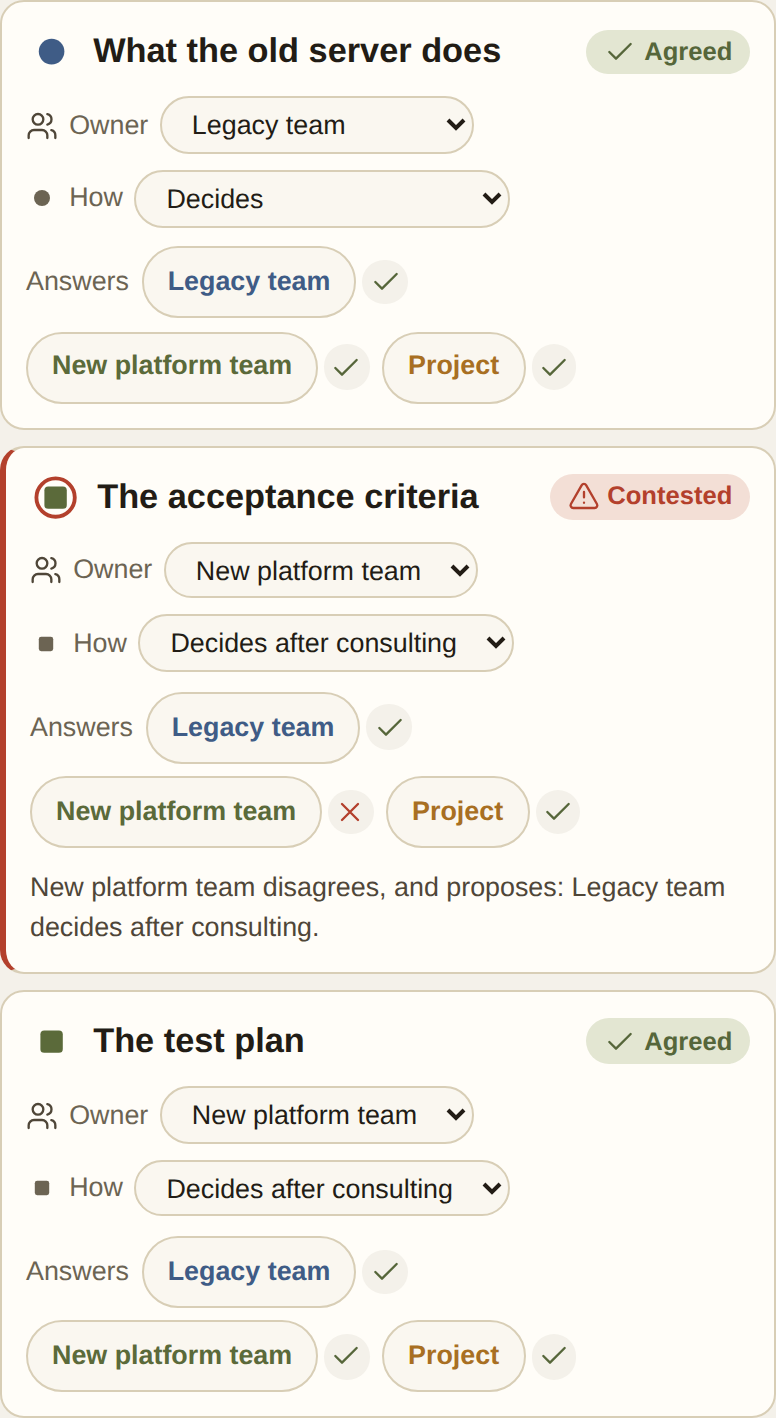
Who sets the acceptance criteria
You put the map on a shared screen, with each team’s position but not who answered, and ask who should set the criteria. The legacy team can say what the old server does, including what happens when the SMS service doesn’t answer, but not what the new one may do differently. The new platform team explains that the new one will send a few seconds later and could send a message twice if a service restarts halfway, and that whether this is acceptable isn’t for developers to decide. The teams agree that the project sets the criteria, after consulting both teams. You change the second responsibility to say so, and the first to say that the legacy team describes what happens on failures too. All three teams answer again, and every responsibility is agreed.
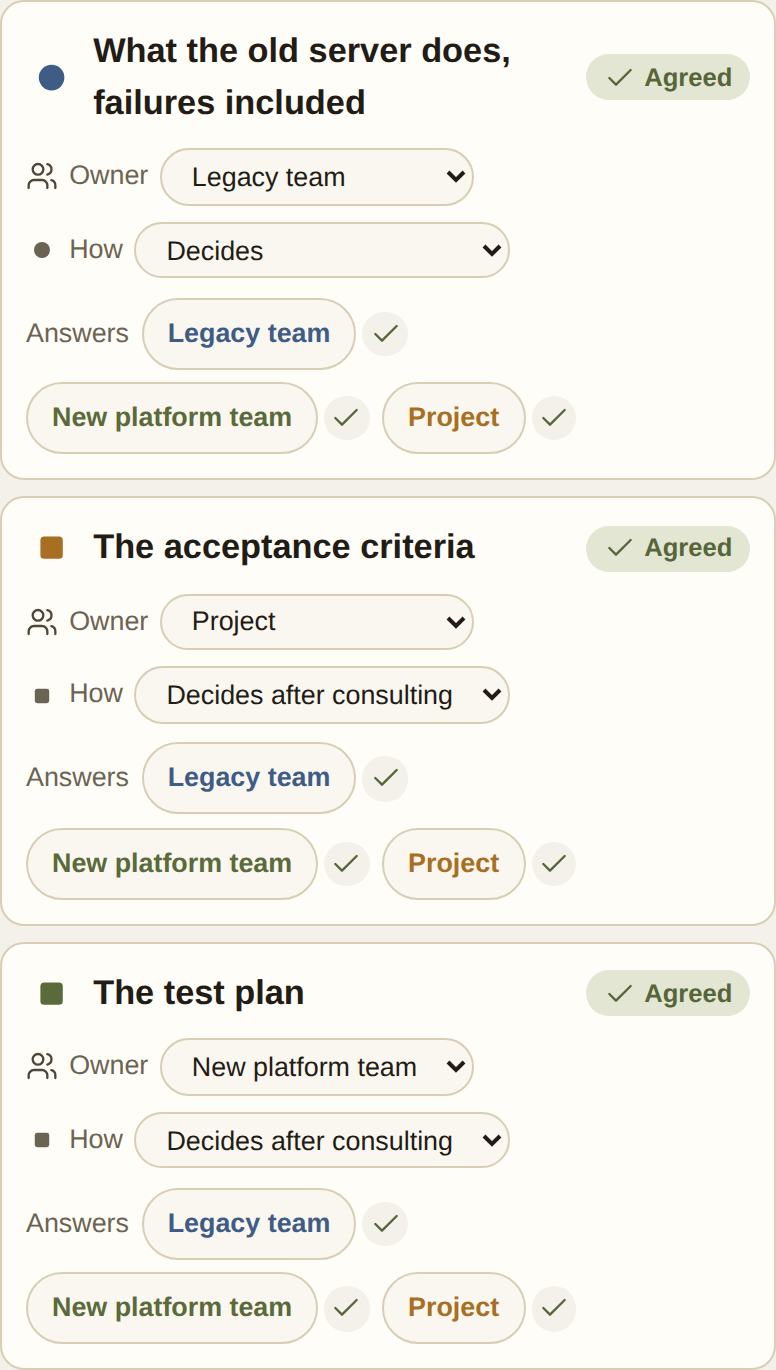
Two weeks later, as the map says, the project has written the criteria with both teams: a confirmation within a minute of the booking, never two to the same customer, and failures handled as today. You set the date for the switch with both teams. The new platform team’s test plan checks each criterion from booking to phone. It ends on that date, when the legacy team switches off the old job before the new one starts.
The template for moving a job to a new platform has these three responsibilities already written, among nine for the legacy team, the new platform team and the project.
You make a map like this one in Reimagine, in your browser, and each team answers there. While Reimagine is a preview, access is by invitation and free. When you ask, Reimagine writes to you once you can create your company’s atlas, and the atlas starts with a sample map you can try before you invite anyone.