A mandate map shows team gaps and overlaps. This example is invented.
Climate adaptation plans
In spring, Risk Management presents a climate scenario analysis to the board. Within fifteen years, two of the ports ShippinVest depends on are likely to flood several days a year. The board thanks the team, and Risk Management considers its part done. In Strategy, people read the report and wait for Risk Management to recommend what to do. Both teams have plenty else to do. The next spring the new analysis shows the same two ports, and nobody has written a plan.
You lead the climate part of the company’s annual report and sit in neither team. When the second analysis reaches the board, a board member asks what was done after the first one, and nobody can say. You want the board to see a plan with the next analysis, without pointing at anyone.
Three responsibilities between Risk Management and Strategy
You create a map for the two teams and write down each step between the analysis and a decision: saying what the results mean for the business, writing the adaptation plan, and deciding which measures go in the budget. For each one you propose an owner and how far the mandate goes. Risk Management says what the results mean after consulting Strategy, Strategy writes the plan after consulting Risk Management, and Strategy decides on the measures.
Each team’s answer
You invite people from both teams into your company’s atlas, the place in Reimagine where its maps are kept, and each team answers when it has time. Risk Management agrees with your proposal for the plan. Strategy answers that Risk Management writes it, since that team knows which ports flood and how often. Each team names the other, and the responsibility is marked Contested. Both teams agree on what the results mean and on the measures.
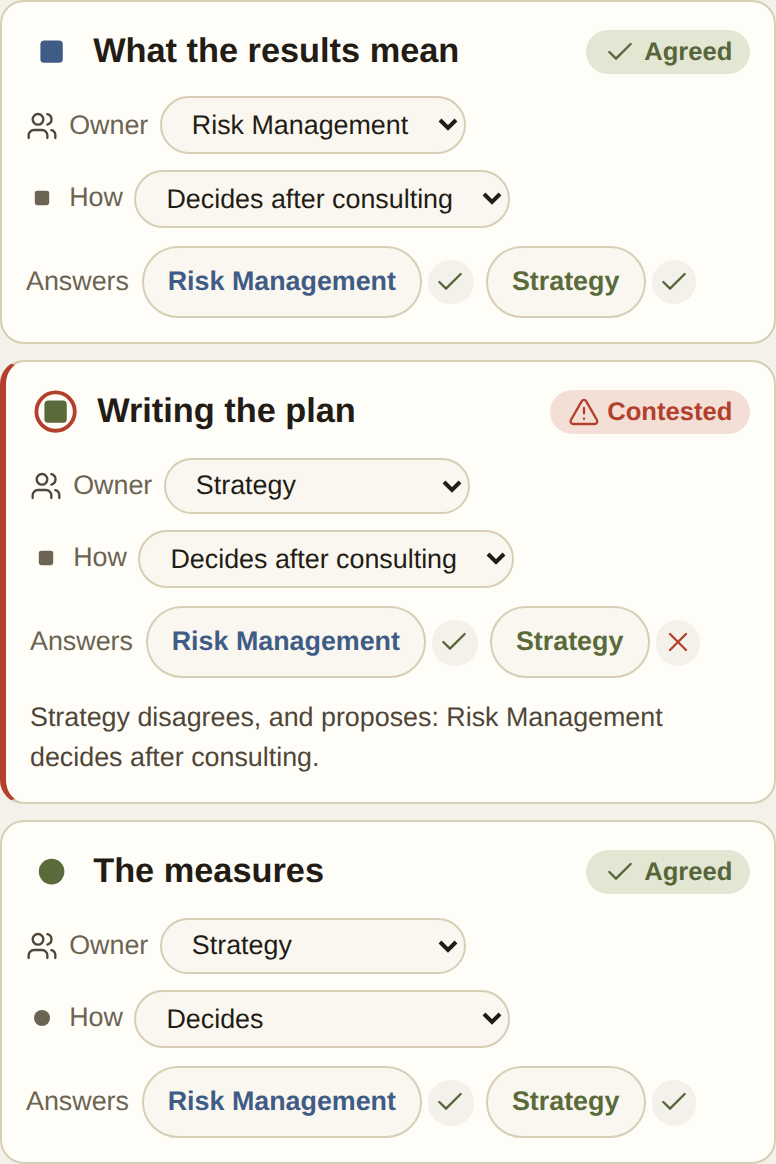
Who writes the adaptation plan
You put the map on a shared screen, with each team’s position but not who answered, and ask who should write the plan. Strategy says it can’t start until it knows how many days each port is likely to be closed. Risk Management can give that, but doesn’t want to choose between moving cargo to other ports and changing routes, since that is a business decision. The teams agree that Strategy writes the plan once Risk Management has given it those numbers. You change the first responsibility to say that Risk Management gives them, both teams answer again, and all three responsibilities are agreed. Saved as a PDF, the map goes to the board, so it knows who writes the plan.
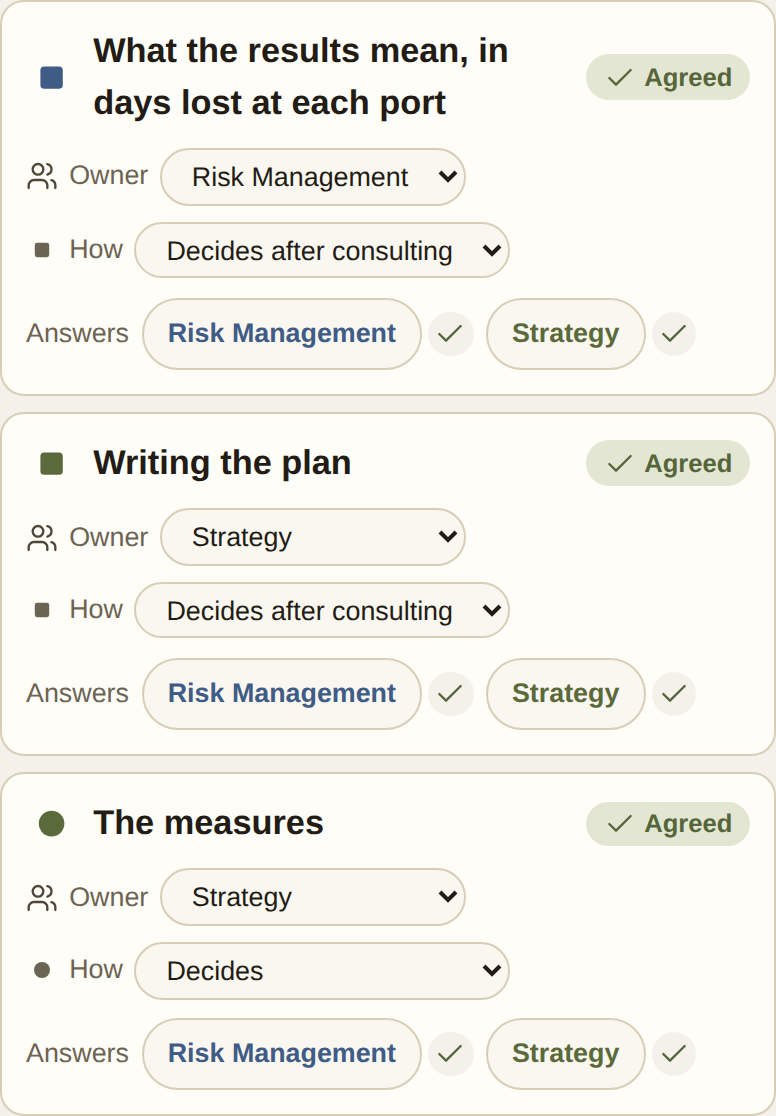
In the autumn, as the map says, Risk Management tells Strategy how many days each port is likely to be closed, and the next spring the adaptation plan goes to the board with the new analysis.
The climate adaptation template has these three responsibilities already written, among eight for Risk Management, Strategy and Operations.
You make a map like this one in Reimagine, in your browser, and each team answers there. While Reimagine is a preview, access is by invitation and free. When you ask, Reimagine writes to you once you can create your company’s atlas, and the atlas starts with a sample map you can try before you invite anyone.